
Now recruiting in…
Boulder County, Colorado, and surrounding areas
Greater Chicagoland area (Old Town, River North, Streeterville, Lincoln Park & Near North Side)
Greensboro, North Carolina
Join Paws for Patrick- Become a therapy dog handler
You and your dog can make a meaningful difference. As a therapy dog team, you’ll help support young people in schools, mental health settings, and community events through calming, connection-driven interactions. Whether it’s easing anxiety, brightening a tough day, or simply offering a moment of comfort, your presence can have a lasting impact on a child’s well-being.
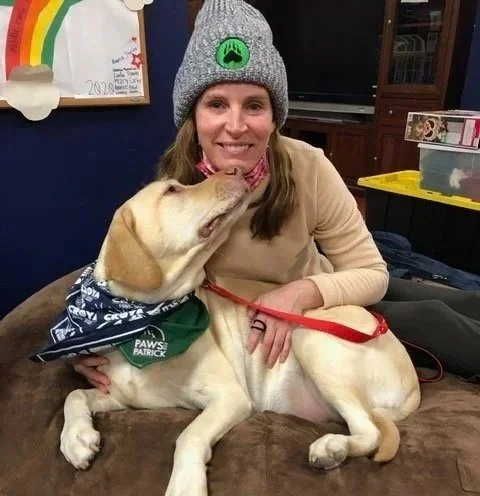
Learn more about the traits that make a strong therapy dog team—from compassionate, dependable handlers to calm, friendly dogs who enjoy being around people.
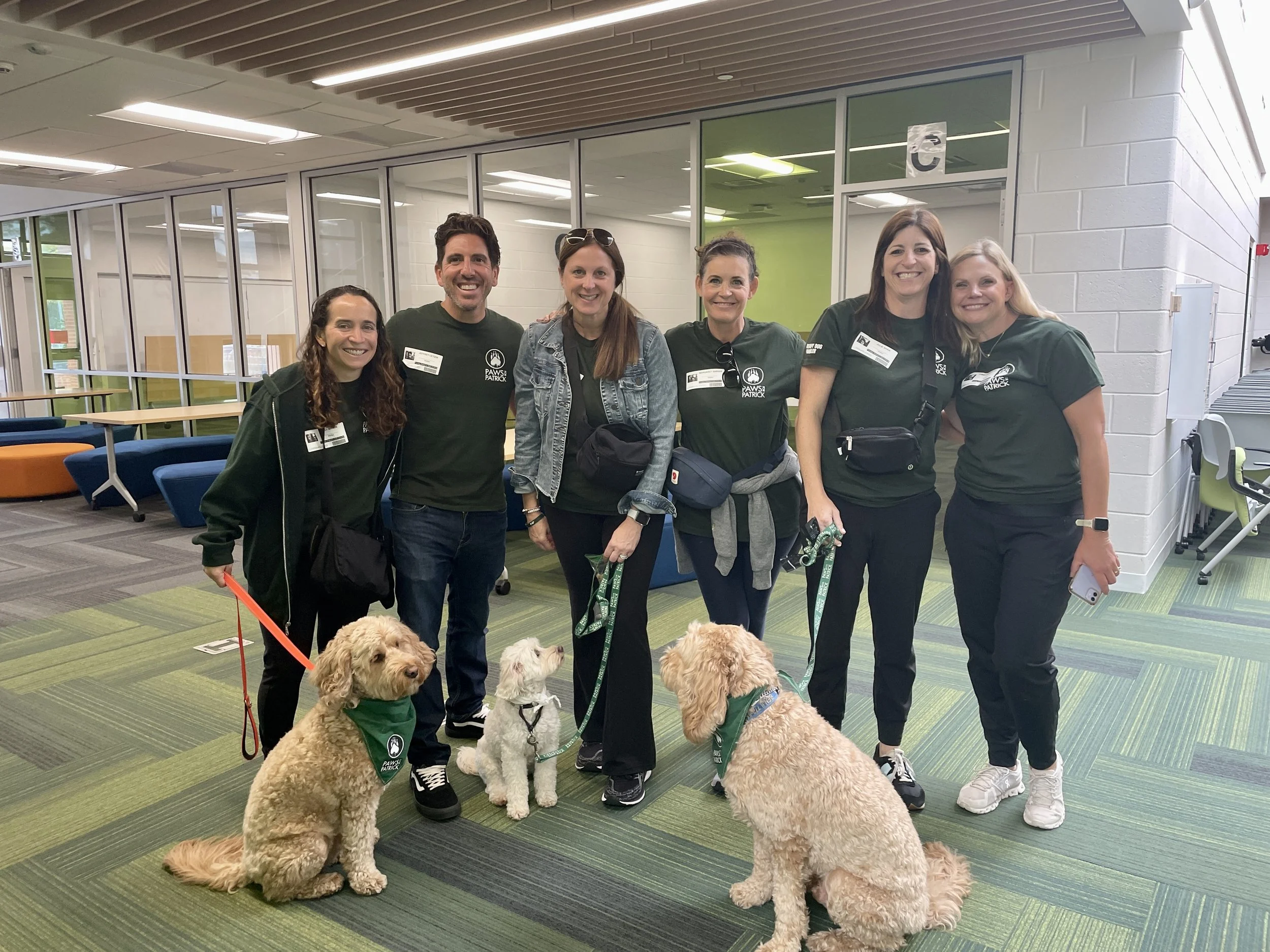
Able to maintain a disciplined relationship with your dog
Passionate about helping young people who are living with mental health challenges.
Reliable, committed, and dedicated to your role
Confident and engaged when interacting with clients and your dog
Flexible with time commitments and event types
Comfortable in diverse settings, such as mental health organizations, therapeutic programs, and schools, during stressful times
Handler Traits
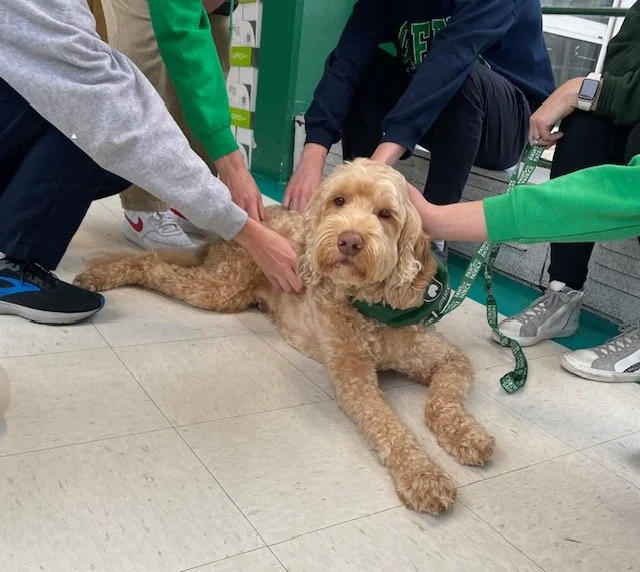
Calm, mild-mannered, and friendly with people
Ability to work closely with other dogs without becoming distracted
Enjoys being petted by strangers and is loving and approachable
Responds well to basic commands and is eager to please
Adaptable, able to adjust to different populations, including those at Mental Health Organizations or working with younger clients
Non-reactive, able to stay focused in environments with large groups, including younger children's demands
Dog Traits

All prospective therapy dogs begin with an initial assessment to determine whether they have the temperament required for therapy work. If they pass this initial evaluation, the dog and handler must then meet the standards set by the Alliance of Therapy Dogs (ATD), an international registry for certified therapy dog teams.
To earn certification from ATD, the team must complete in-person evaluations that assess the dog's behavior and manners, as well as the handler's control and communication skills. As part of the certification process, the team is observed during three supervised visits to medical facility residents.
Once these visits are successfully completed and the handler submits all required documentation—including proof of current vaccinations, a negative fecal exam, and a criminal background check—the dog and handler can apply to become a certified Therapy Team with Paws for Patrick.
The Paws for Patrick team will guide you through certification, provide onboarding support, and match you with visits that fit your schedule.
FAQs
Visit Duration & Format
-
Visits typically last 30 to 60 minutes. Therapy Dogs can work for a maximum of 1 hour at a time.
-
The format varies based on facility type, participant age, and space:
Some schools divide students into groups of 10–12, each group spending 30 minutes with different dogs.
Larger schools may have shorter 15-minute sessions spread over an hour or two.
Some facilities allow participants to stay with one dog for the full hour.
High school visits may occur during lunch or a wellness fair, with students coming and going as their schedule allows.
-
It’s common for one or two participants to feel nervous at the start of a visit. Our handlers are trained to support these situations with care. No one is ever forced to interact with a dog, and participants are never made to feel uncomfortable for choosing not to.
We encourage nervous participants to observe from a distance at first. Often, as the visit progresses, they gain confidence and may choose to approach or even pet the dog. Therapy dogs are calm and gentle, do not jump or bark, and frequently lie down quietly, allowing participants to pet or snuggle with them at their own pace.
Location & Space
-
Visit locations depend on participant age and facility layout. Common locations include:
Classrooms
Large open spaces (gyms, cafeterias)
Small settings (multi-purpose)
-
Most visits will have a ratio of 10-15 participants per dog to ensure the experience is enjoyable and safe for everyone.
Therapy Dogs
-
Therapy dogs can be of any breed, age (must be at least 1 year old), or size.
-
Depending on participant numbers, time, and available space, 1 to 4 dogs may attend.